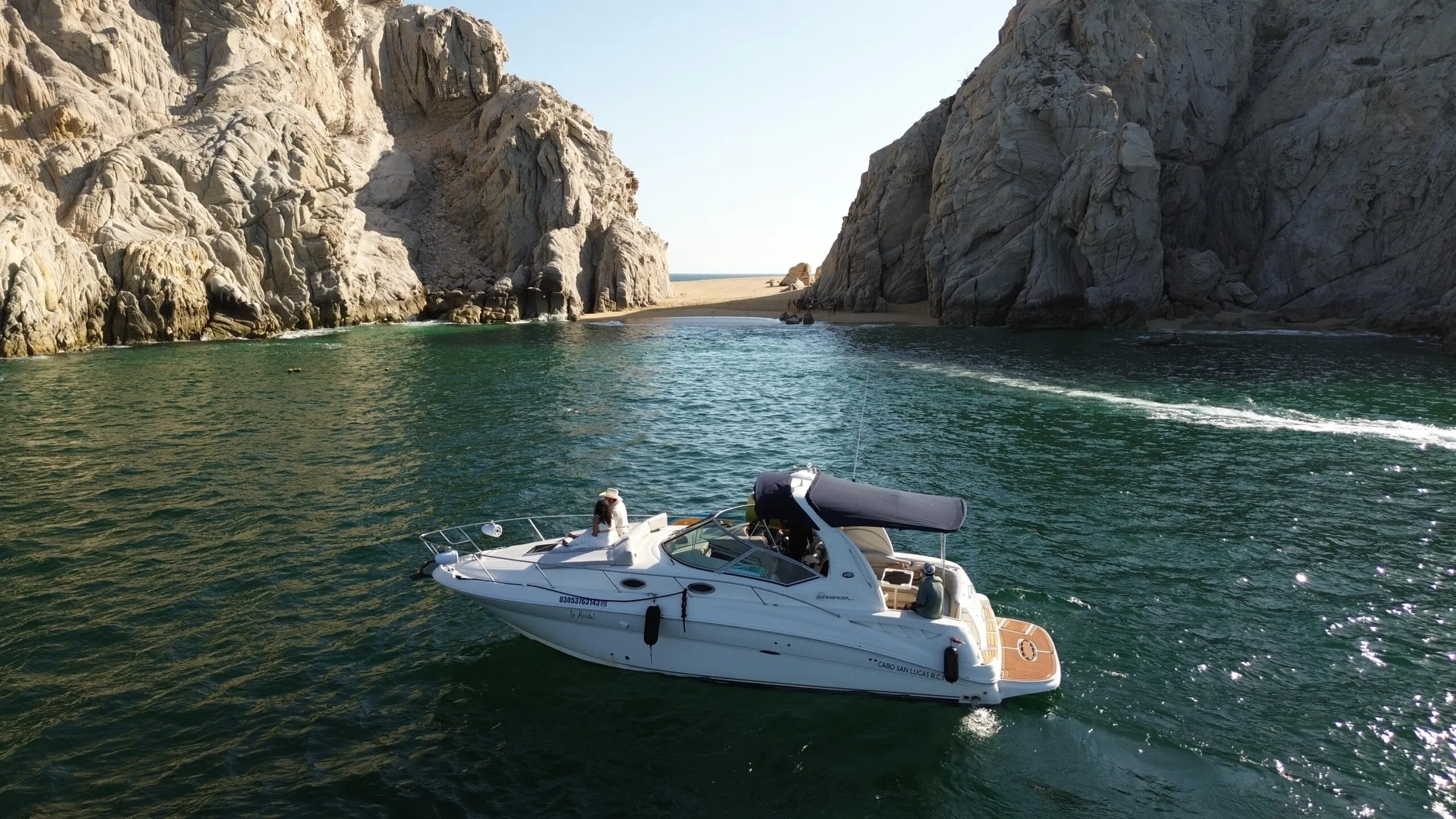
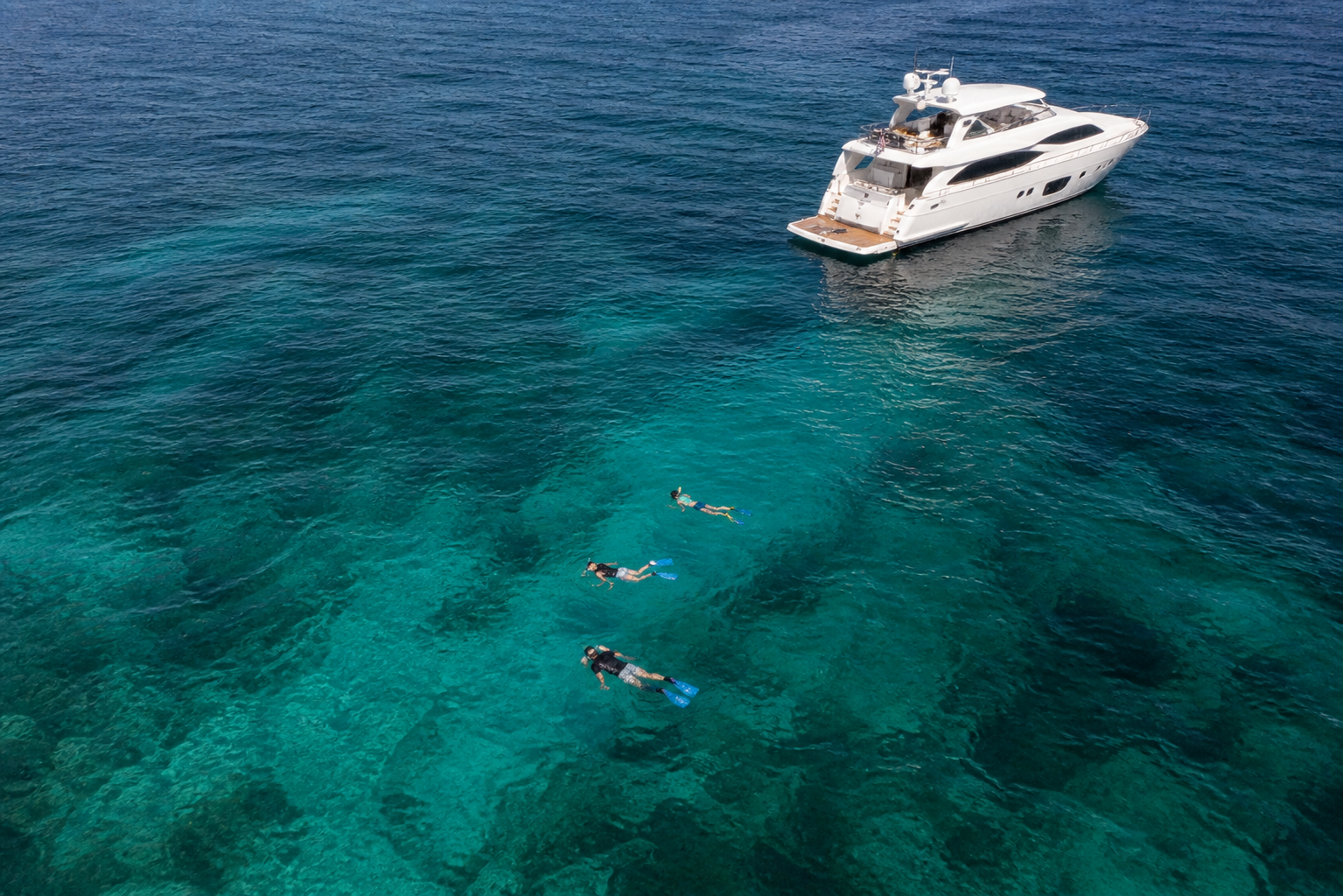
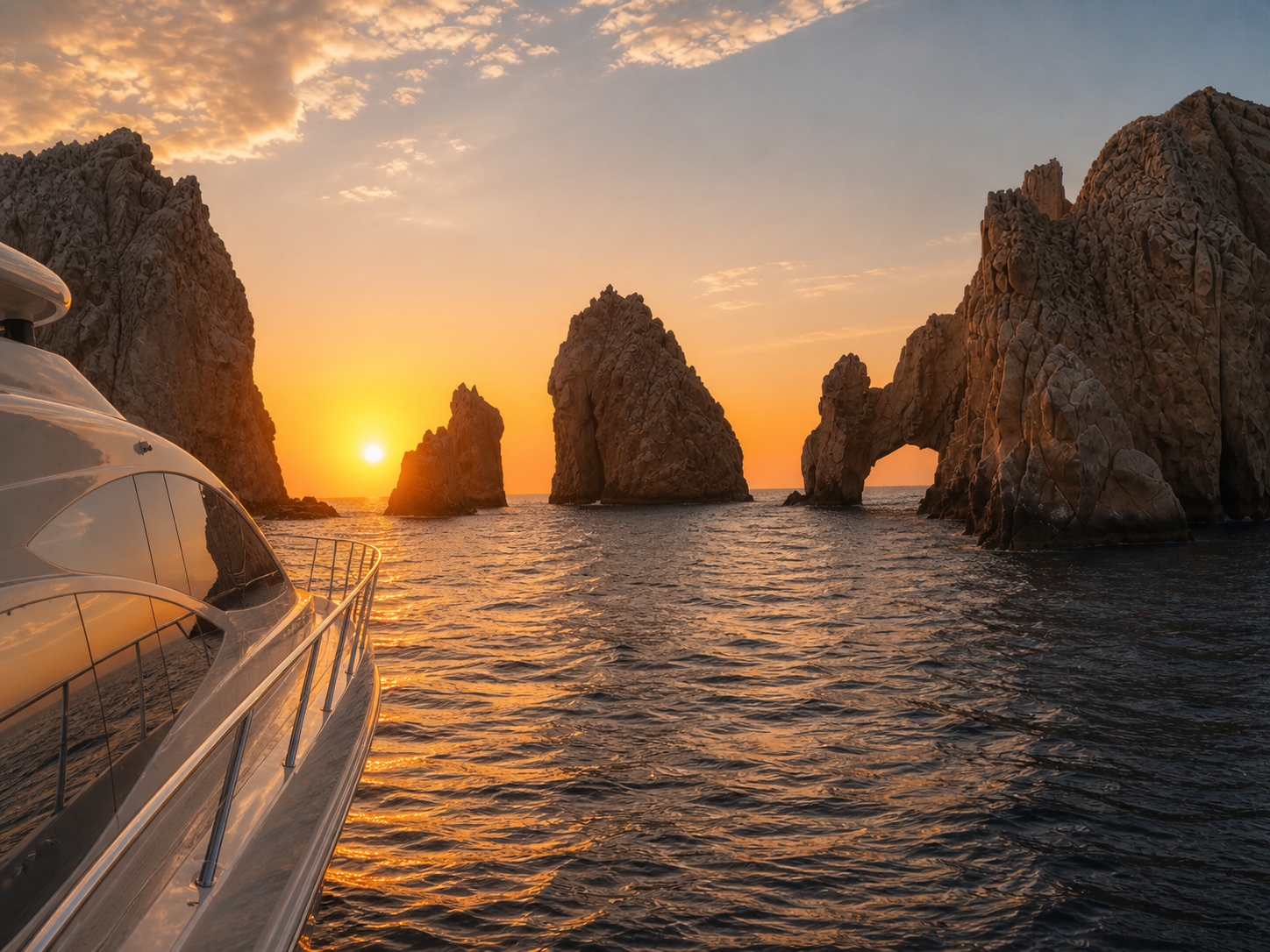
From December through April, the waters off Cabo San Lucas become one of the world's premier whale watching destinations. Humpback and blue whales pass through our charter routes on their seasonal migration — putting you closer to these magnificent animals than any land-based viewpoint ever could. A private whale watching charter with P.Y.C removes every distraction and positions your group, aboard a fully crewed private vessel, directly in the path of the whale migration routes the captains know from years of experience on this water.
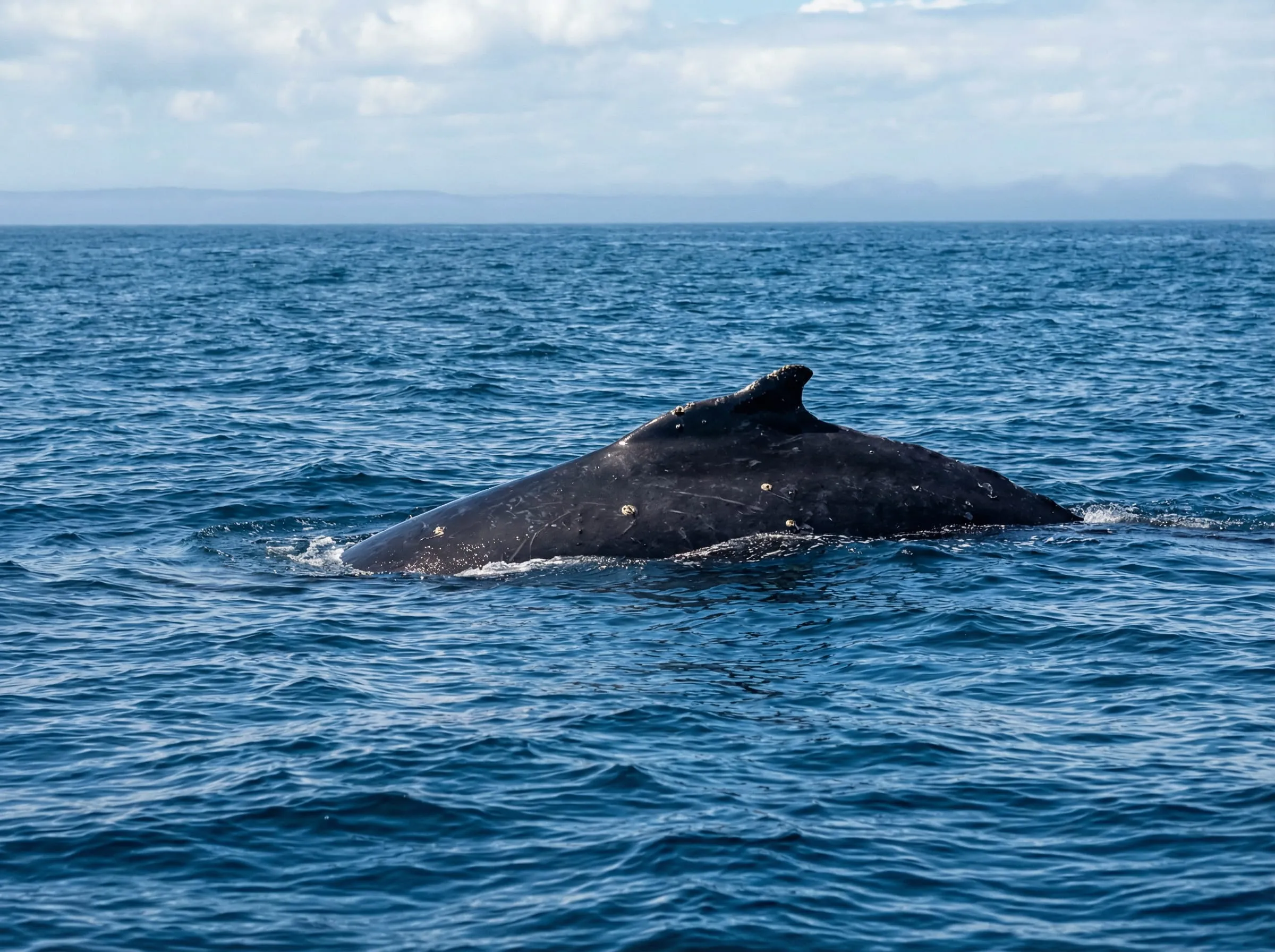
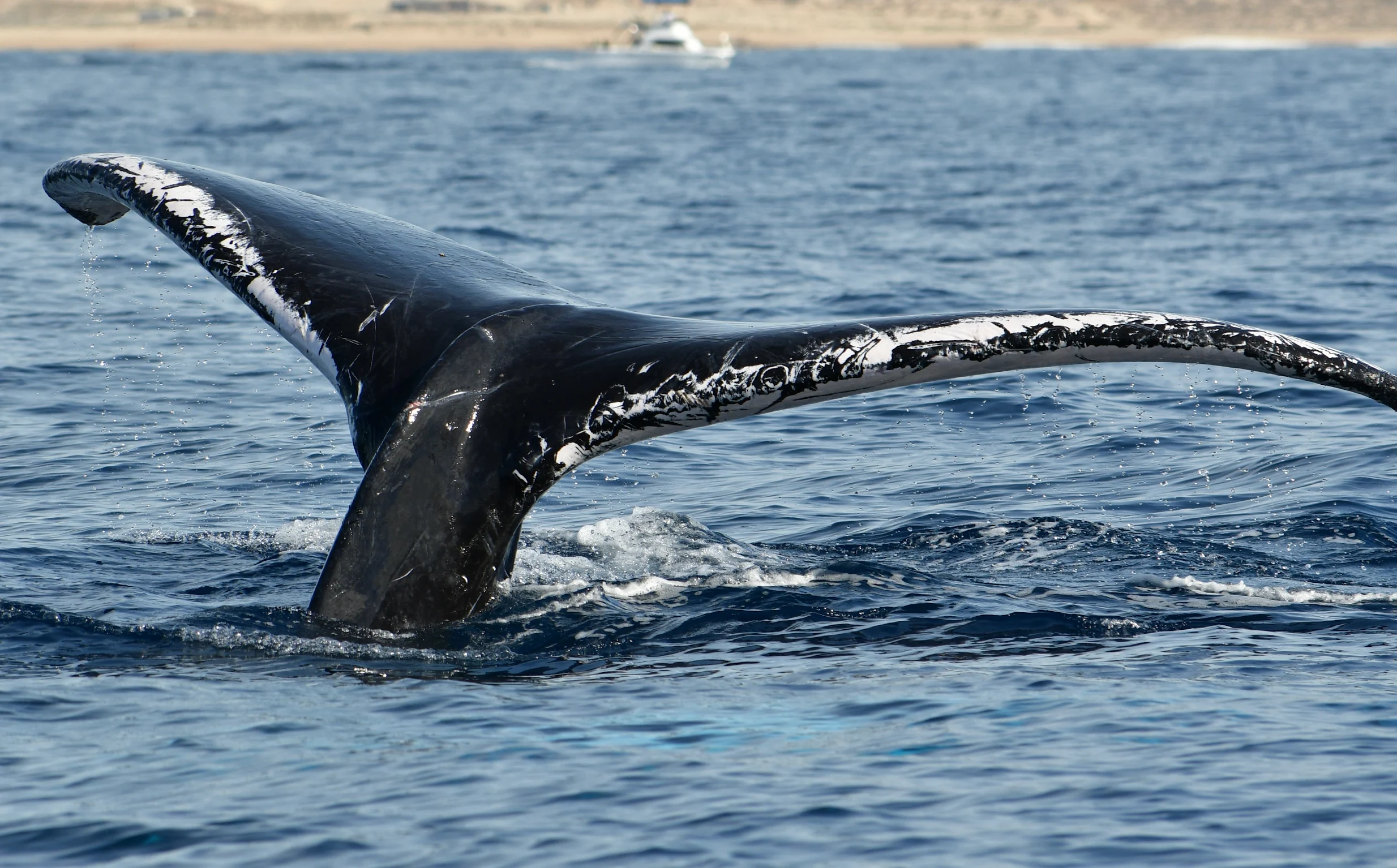
The encounter depends on the season, the conditions, and the day — but our captains know these waters intimately and the whale migration through the Sea of Cortez is one of the most reliable and spectacular wildlife events in North America. Humpback whales breach, tail-slap, and surface in close proximity to vessels throughout the season. Blue whales — the largest animals to have ever lived on this planet — pass through the outer waters in extraordinary numbers. Both species have been encountered at distances close enough to make the experience genuinely unforgettable.
This is a fully private charter experience. No shared decks, no other groups, and no time pressure that cuts a sighting short. Your captain navigates toward the whale activity and manages the vessel's approach to ensure a responsible, high-quality encounter. Bar service and light provisions can be arranged for the charter. Contact our team with your preferred dates to receive a quote and check vessel availability.
What's Included
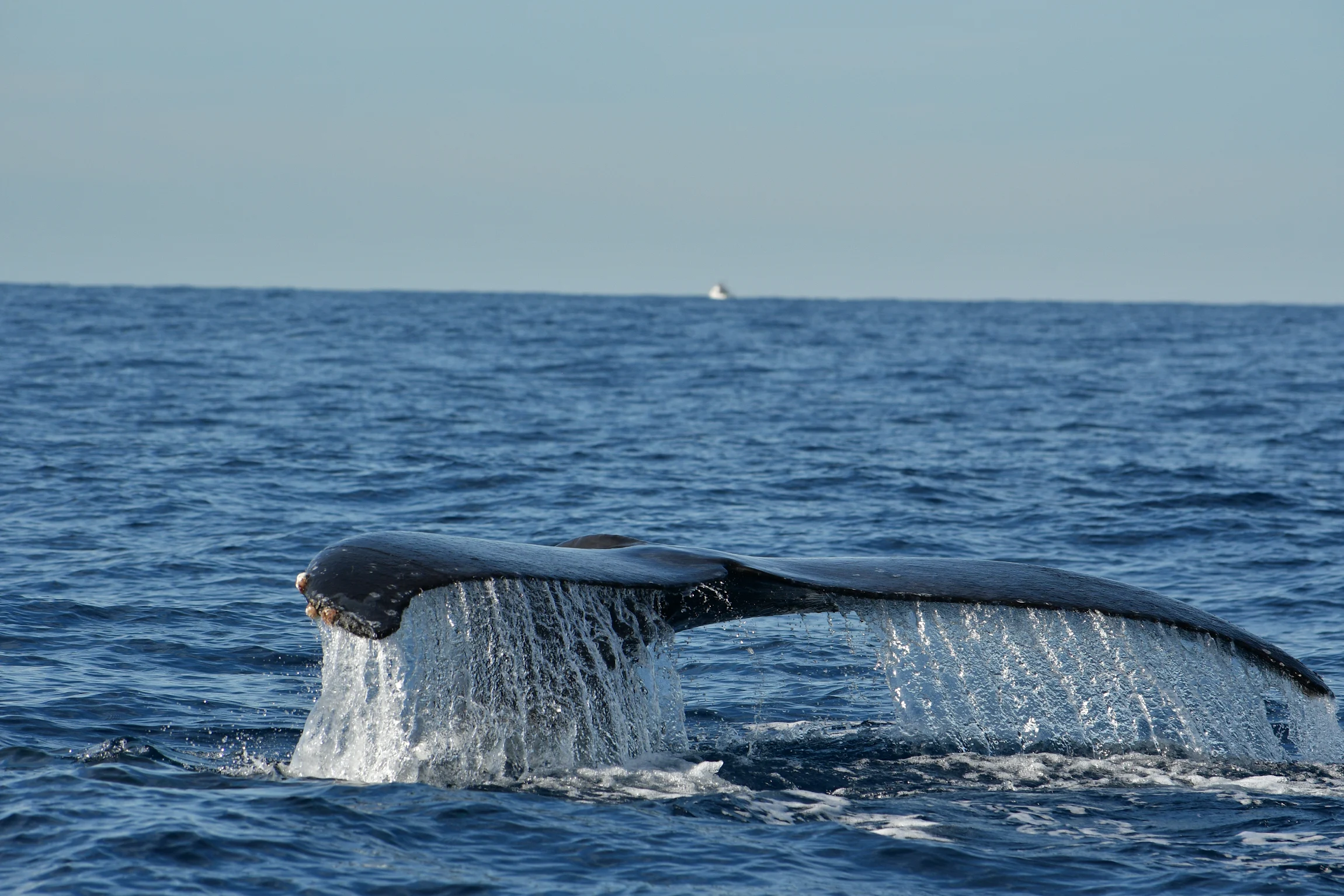
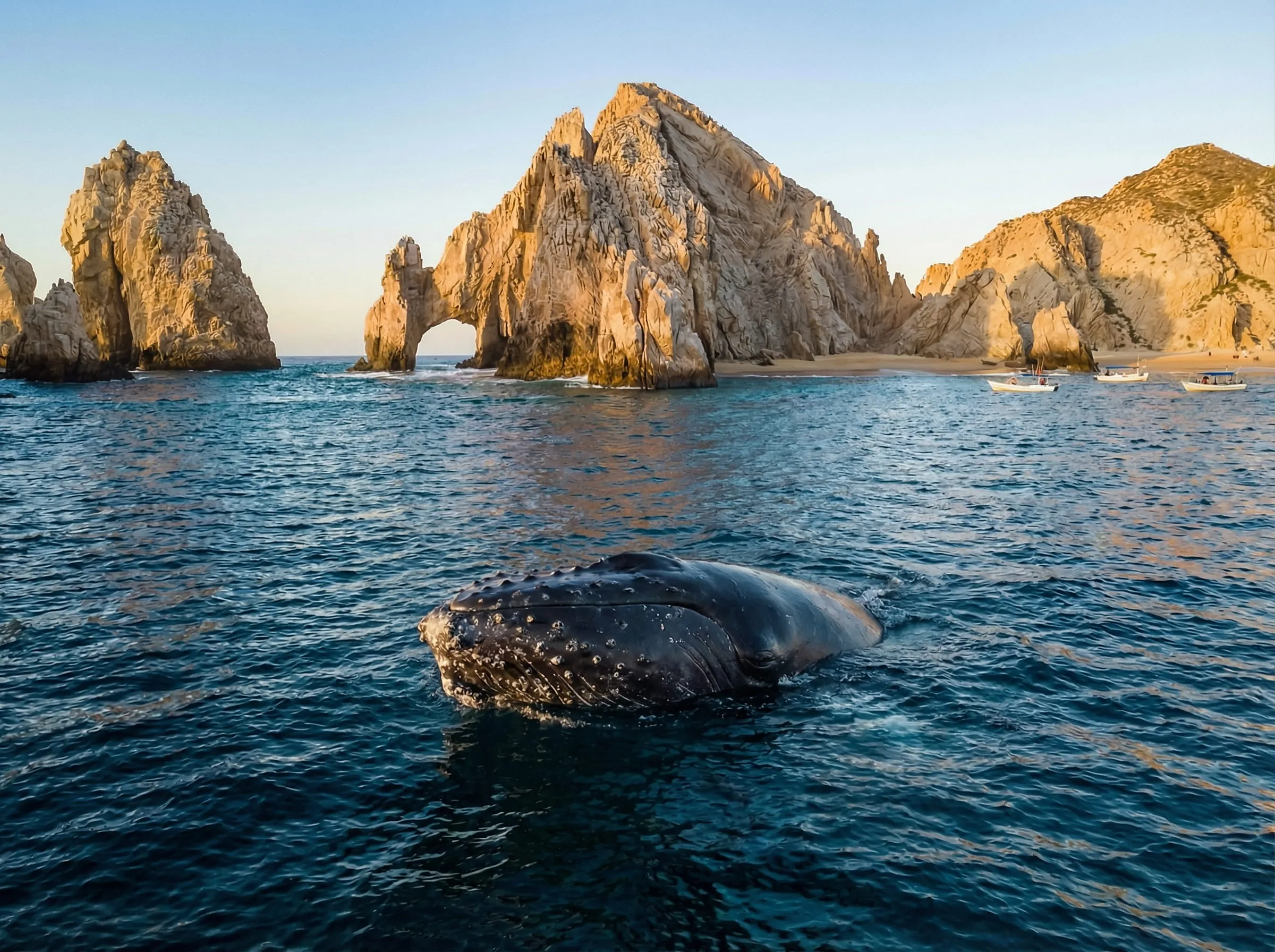
The annual humpback whale migration brings these extraordinary animals through the waters surrounding Cabo San Lucas each winter season. Humpbacks travel from their cold-water feeding grounds in the North Pacific to the warmer waters of the Sea of Cortez and the Mexican Pacific, where they calve and breed between December and the end of April. The peak of the season typically falls in January and February, when whale activity is highest and the probability of a spectacular surface encounter is at its greatest.
Blue whales are present in the Sea of Cortez throughout the year but concentrate in the southern reaches of the gulf during the winter months, when the upwelling that drives their krill feeding reaches its seasonal peak. Blue whale encounters are less predictable than humpback encounters but remain one of the most profound experiences available to any wildlife observer — a creature of almost incomprehensible scale surfacing alongside a private yacht on the open water of the Sea of Cortez.
Wildlife encounters of this kind require a captain who understands not only how to find whales, but how to approach them responsibly and position the vessel for the optimal experience without disturbing the animals. P.Y.C captains follow established guidelines for responsible whale watching — maintaining appropriate distances, avoiding sudden manoeuvres near surfacing animals, and reading the behaviour of individual whales to understand how close an approach the animal is comfortable with.
The result is an experience that is both extraordinary and ethically sound. Humpbacks that are comfortable with vessel proximity will often remain near the boat for extended periods — breaching, tail-slapping, and swimming in formations that produce photographs of exceptional quality. Blue whale encounters produce a different quality of experience: the sheer physical scale of the animal, even at distance, is unlike anything else accessible to travellers in this part of the world.
The geography of Cabo San Lucas sits at the confluence of two of the ocean's most powerful systems — the Pacific and the Gulf of California. This meeting point creates a nutrient-rich corridor that draws both humpback and blue whales through the waters surrounding the peninsula each winter. The Sea of Cortez acts as a warm-water refuge for breeding and calving, while the open Pacific beyond Land's End provides the deep-water transit routes along which the migration flows. Few places on earth offer access to both at once from a single marina.
The result is that chartered whale watches from Cabo San Lucas can encounter multiple species in a single outing, moving between the protected inner waters and the outer Pacific swells in a matter of minutes. Humpback activity is frequent and dramatic throughout the season; blue whale encounters, while less predictable, are possible from January through March as the largest animals on the planet move through the deep channels just offshore. For any wildlife observer, this density of marine megafauna is exceptionally rare.
The experience of watching whales from a crowded commercial tour boat and from a private crewed yacht are fundamentally different propositions. On a shared tour, your position relative to the whale is determined by the needs of the group — you may be at the stern when the breach happens, or blocked by other guests when the animal surfaces. Time at sea is fixed, the itinerary is fixed, and your individual experience is secondary to the requirements of operating a high-volume excursion.
A private charter inverts every one of those conditions. Your captain navigates specifically for your group, positions the vessel based on your viewing preferences, and manages the pace of the charter entirely around the encounter. When a humpback surfaces fifty metres from the bow and lingers, you stay. When conditions push activity further offshore, you follow. There is no schedule but your own, and no other guests competing for the best position. For an experience as dependent on positioning and timing as whale watching, this difference is simply not negotiable.
The whale watching season in Cabo runs from December through the end of April, but the quality of encounters varies considerably within that window. December and early January mark the opening of the season, when the first humpbacks begin arriving in the warmer southern waters. Activity builds steadily through the month and peaks in late January and February — the period when both whale density and surface behaviour are typically at their highest. This is when the most spectacular breaching and close approaches are most reliably observed.
March and April offer a different quality of encounter — still excellent by any measure, but as the season draws toward its close the whales are increasingly active in preparation for their return migration northward. Late-season humpbacks are often seen in energetic surface displays that produce exceptional photography. The shoulder period also tends to coincide with calmer sea conditions, making the charter itself particularly comfortable. Any date within the December–April window has genuine potential for a memorable experience, and our captains will advise on current conditions and recent activity when you enquire.
The marine life in the waters surrounding Cabo San Lucas extends well beyond whales. Dolphins — including common, bottlenose, and spinner dolphins — are present year-round and frequently accompany vessels or feed in surface activity visible from the charter. Manta rays, sea lions, and a wide variety of seabirds are regular features of the offshore environment, and the waters around Land's End are consistently rich in marine life regardless of the season. A whale watching charter is rarely a single-species experience.
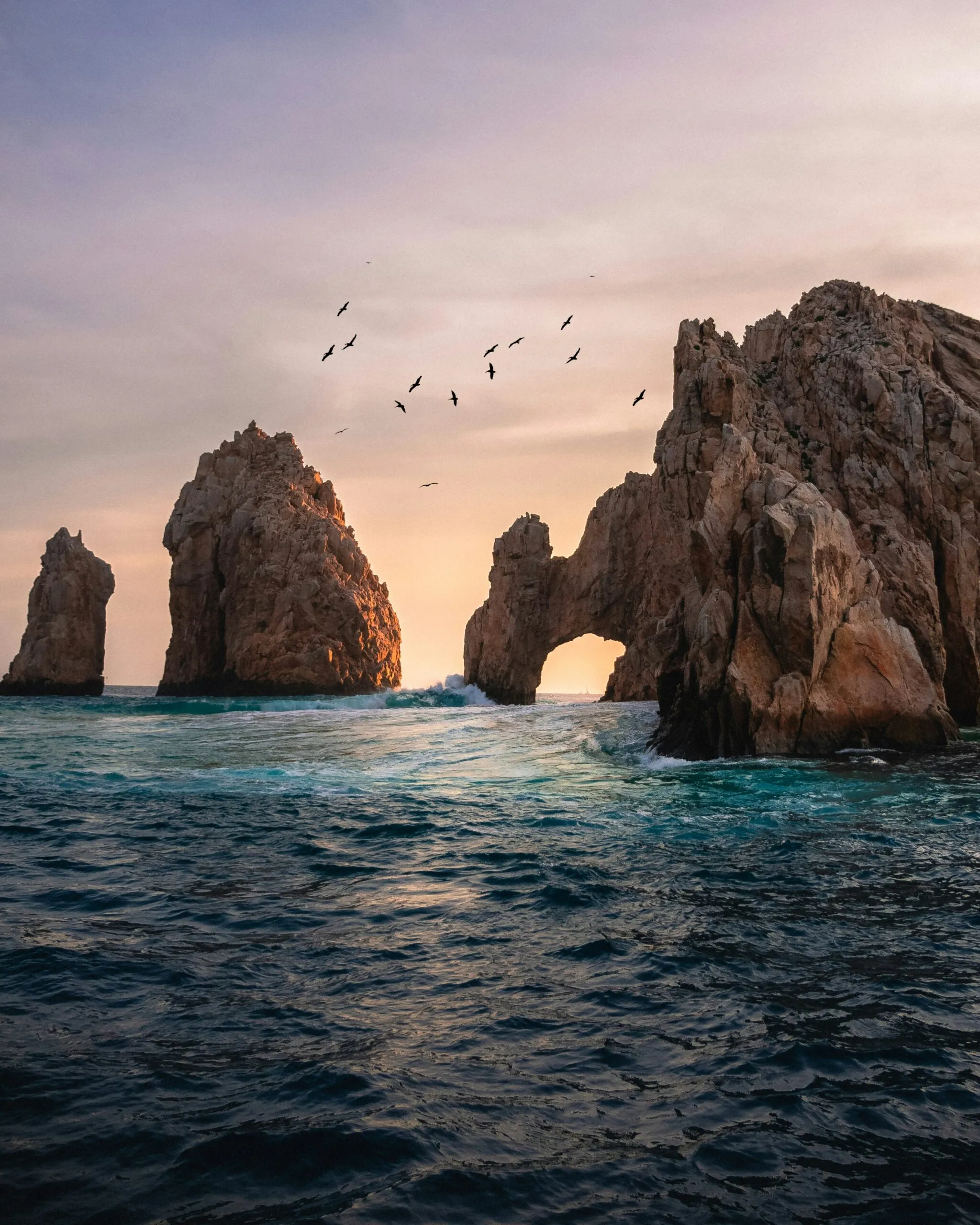
Beyond wildlife, a private charter in the Sea of Cortez during the winter months is one of the most beautiful ways to experience the Baja coast. The air is warm and clear, the light on the water is exceptional, and the dramatic landscape of the desert peninsula — cliffs, coves, and the iconic arch at Land's End — provides a backdrop that makes the entire charter memorable quite apart from any whale encounter. Bar service can be arranged, and the crew will ensure your comfort throughout the day on the water.